Rethinking Productivity For Better Collaboration
Throughout our recent strategic planning process, one thing we heard from partners was how short they were on time and the importance of our time being well spent.
“Public health professionals are strapped for time. Capacity is the biggest barrier.”
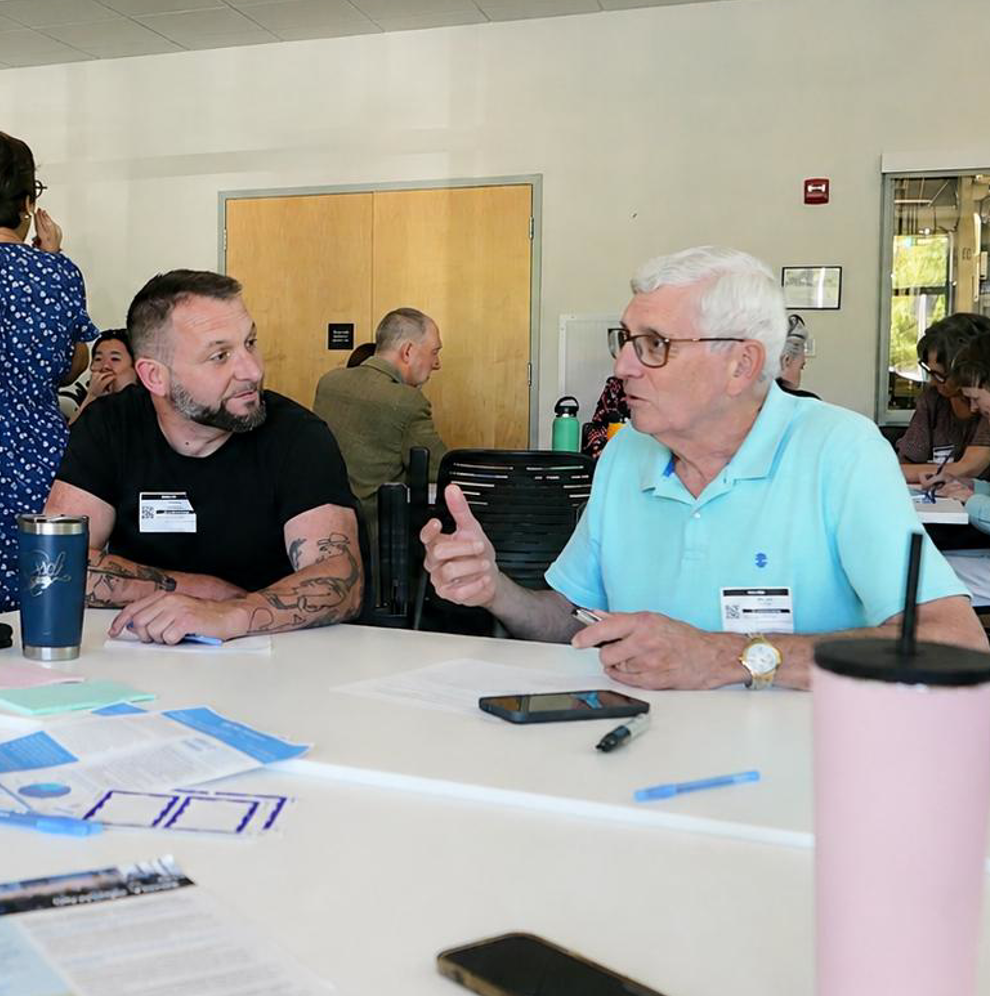
The very purpose of the Public Health Council (PHC) is to promote and support collaboration and sharing among our partners so we can deliver better services to our constituents. We know that collaboration can work, but it can also cost precious resources. Time is precious, and if not allocated or used wisely, collaboration and efficiency take a significant hit. Learning how to properly use all our resources will take our efficiency and organization to a new level.
The Public Health Council of the Upper Valley (PHC) connects and communicates with many other organizations and partners. We are always thinking about how to improve work strategies and increase efficiency of collaboration. As a research project for PHC, Ryan Blumenfeld, an MPH student from the Geisel School of Medicine at Dartmouth, tackled the idea of maximizing efficiency, particularly in work settings. To fulfill his internship requirement for the MPH program, Blumenfeld completed a literature review that covers the history and science behind productivity, strategies for meeting effectiveness and how to utilize AI technology as a tool to increase overall efficiency.
Meetings vs. Meaningful Work: Rethinking Productivity, Time & the Role of AI in Modern Organizations
The goal of Blumenfeld’s work was to focus specifically on understanding what makes work time and meetings more or less efficient uses of time. His research went deeper than the actual content of the meeting and extended into how both pre and post meeting time could be improved. Through his work, PHC hopes to provide techniques and tips taken from Blumenfeld’s research so others can use them in their own work environment.
One of the main findings was how to protect tine for daily work tasks. Creating an environment that upholds the expectation that employees or the organization will benefit from a meeting is important. Defining the purpose of an activity or meeting gives people the ability to gauge what they will be gaining from it. Again, time is valuable, and nobody wants to waste their resources or effort. If a meeting is held with no clear purpose or agenda, people can feel their time was wasted. It is very important to be intentional when scheduling meetings. This includes being considerate of others schedules and working periods.
Preparation Matters
Another area of focus was the significance of preparation and how the time leading up to a meeting can be just as important when it comes to end results. Preparing your team with an agenda, or even an overall theme of a meeting can improve motivation and clarity among employees. Keeping people in the loop of planning and what is to come helps keep certain ideas and topics on the forefront of everybody’s mind. After a meeting, it is just as important to follow up to capitalize on discussions or future plans. This could include an email sent right after a meeting with a bulleted list of the most important takeaways and planned future steps. This uses a productive strategy and ensures people are taking initiative to accomplish the goals at hand.
Finding Your Deep Work Time Sweet Spot
Blumenfeld found several research articles on productivity and how our best work can vary depending on the time of day. Research shows the average worker struggles to find blocks of uninterrupted working time. This includes disruptions from scheduled meetings, even if they are work related. Our deep working time only occurs when we are at our most focused and productive state — something that will not be happen when we are interrupted. Understanding employees’ working patterns or preferences is crucial to creating a good working environment. Studies show most humans are most productive in the mornings and earlier in the week. By looking at these findings, we can learn what scheduling patterns will help our employees and organizations best succeed. Providing adequate working blocks and avoiding breaking them up will improve efficiency and will also help maintain focus levels during meetings.
The Purpose Driven Meeting
Consistency is key for organizations, making routine schedules a good thing. On the other hand, if we hold regular meetings without a clear purpose, the meeting may not be worth people’s time. Checking in on goals, your employees workload and team checkpoints is important. Being awareness of when a meeting is needed or not is vital for respecting others’ resources and schedules. Maybe that weekly Tuesday meeting gets cancelled every so often if deemed unnecessary.
Harnessing AI to Help Understand Productivity
A significant development in today’s world is the advent of Artificial Intelligence (AI). Blumenfeld found many resources that dove into the many ways AI can be useful, including work settings and in meetings. AI can help complete smaller tedious and time-consuming tasks, such as taking notes and summarizing meetings. AI can track who spoke, what content people were focused on, and trends in conversation patterns.
An AI prompt might be, “Summarize this meeting into key decisions, action items, next steps, questions asked and who said what.” AI will respond with a written report that answers these questions and gives you insight on how productive the time was. This can also help track who is engaging and contributing to meeting outcomes. It also may help you design the next meeting based on feedback about meeting productivity. Implementing this technology in a smart and safe way can support human-to-human interaction while supporting smarter use of time, talent, and resources.
Ryan developed and tested a number of AI prompts you can use to analyze meeting transcripts. Give it a try to see what you learn about your own meetings. AI Prompts for Meeting Analysis
There are many ways we can improve our work patterns and tactics. The PHC hopes to share Blumenfeld’s work with our partners to start a conversation about how we can all work smarter, design collaboration more intentionally, and deliver better results for our stakeholders. To read Blumenfeld’s literature review, CLICK Rethinking Productivity Report June 2026.
— Written by Lily Gubbins, based on research conducted by Ryan Blumenfeld, MPH candidate at Geisel School of Medicine at Dartmouth

Leave a Reply
Want to join the discussion?Feel free to contribute!